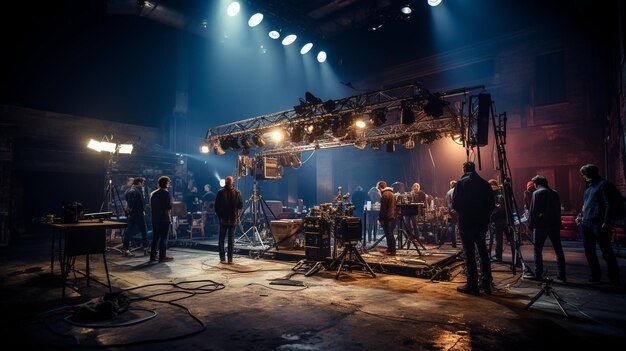
Ever wondered how a simple idea blossoms into a cinematic masterpiece that grips millions? The journey from a blank page to the silver screen is one of the most complex, collaborative, and often unpredictable creative endeavors imaginable. Diving into the Behind-the-Scenes and Production History of any film reveals a tapestry woven with ingenuity, tireless effort, and sometimes, a little bit of magic. It's a world where artistic vision meets logistical brilliance, where countless hands contribute to a shared dream.
At a Glance: The Journey of a Movie
- It's a marathon, not a sprint: Movie making is broken down into three main stages: Pre-production (planning), Production (filming), and Post-production (refining).
- A symphony of specialists: Hundreds of professionals, from directors and producers to grips and gaffers, play crucial roles.
- Obstacles are inevitable: Budget limits, tight schedules, and creative disagreements are constant challenges that demand innovation.
- Technology is a game-changer: Digital cameras, advanced editing software, and streaming platforms have reshaped how films are made and seen.
- Collaboration is king: Success hinges on seamless teamwork and clear communication among all departments.
The Grand Blueprint: Pre-Production's Meticulous Planning
Before a single frame is shot, a colossal amount of planning takes place. This pre-production phase is the bedrock of any film, where the vision is meticulously carved out and every detail is accounted for. Skipping steps here often leads to chaos later on.
Crafting the Narrative: From Concept to Script
It all begins with a story. A screenwriter takes a concept and transforms it into a compelling screenplay, the film's literal blueprint. This isn't just dialogue; it includes scene descriptions, character actions, and setting details that capture the story's essence. This script will evolve through many drafts, often with input from producers and the director, until it's deemed ready to guide the entire production.
Assembling the Ensemble: The Art of Casting
Once the script has a solid form, the hunt for the perfect actors begins. Casting involves extensive auditions, chemistry reads, and careful consideration to find individuals who can genuinely embody the characters and bring them to life. The right actor can elevate a good script to greatness, while a miscast can sink an otherwise promising project.
The Financial Framework: Budgeting for the Big Screen
Every dream needs resources, and in filmmaking, that means money. Budgeting is a critical, often daunting, task where producers develop a detailed cost outline for every aspect of production. This includes everything from actor salaries and location rentals to equipment, catering, and post-production services. Efficient financial resource allocation is key, and budget constraints are a universal challenge, forcing filmmakers to be incredibly resourceful.
Laying the Groundwork: Locations, Schedules, and Crew
Beyond the script and cast, pre-production dives deep into the logistical nitty-gritty. This includes:
- Location Scouting: Finding the perfect settings that match the script's descriptions and contribute to the film's visual storytelling.
- Scheduling: Mapping out every single shoot day, considering actor availability, weather, location permits, and crew working hours – a logistical puzzle of epic proportions.
- Crew Assembly: Bringing together the hundreds of professionals needed, from cinematographers and production designers to assistant directors and gaffers, forming the team that will execute the vision.
Thorough pre-production is more than just planning; it's proactive problem-solving, designed to ensure the subsequent, often chaotic, stages run as smoothly as possible.
Lights, Camera, Action! The Production Phase
This is where the magic happens – or at least, where it's captured. The production phase is the actual filming, a whirlwind of creative energy, technical precision, and often, high-pressure decision-making on set.
Building Worlds: The Art of Set Design
Before actors step onto a stage, the world they inhabit must be constructed. Production designers are the architects of the film's visual environment. They work tirelessly to create sets, choose props, and design aesthetics that perfectly match the film's tone, style, and narrative. A well-designed set isn't just a backdrop; it's a character in itself, enhancing the storytelling and immersing the audience.
The Visual Storyteller: Cinematography in Action
The cinematographer, also known as the Director of Photography (DP), is the film's chief visual artist. They make critical decisions about lighting, camera angles, movement, and shot composition, all to achieve the director's visual aesthetic and convey the story's mood and atmosphere. Every frame you see is a deliberate choice made by the DP, guiding your eye and influencing your emotional response.
Guiding the Vision: The Director's Chair
At the heart of the set, the director is the captain of the ship. They guide the actors to deliver desired performances, ensure the crew executes their vision, and maintain creative control over every shot. From blocking scenes to interpreting emotional beats, the director's unique vision shapes the film's narrative, tone, and overall impact. They are the ultimate arbiter of the story's translation from script to screen.
Polishing the Gem: Post-Production's Refinement
Once filming wraps, the raw footage is far from a finished movie. The post-production phase is where the film truly comes together, undergoing a meticulous refinement process that can transform hours of raw material into a coherent, compelling narrative.
Weaving the Narrative: The Editor's Craft
Raw footage is like scattered puzzle pieces. The editor takes these pieces – thousands of hours of clips, takes, and angles – and assembles them into a cohesive story. This involves cutting, rearranging, and refining scenes, determining the pacing, rhythm, and overall structure of the film. An editor's choices profoundly influence how an audience experiences the story, shaping emotions and building suspense.
The Auditory Landscape: Sound Design and Music
Beyond what you see, what you hear is equally vital. Sound designers are responsible for the film's entire auditory landscape, meticulously layering effects, ambient noise, dialogue, and music. The deliberate use, or even absence, of sound can create tension, evoke emotion, and immerse the audience in the film's world. Think of a horror film without its chilling score, or a battle scene without its thunderous explosions – the impact is diminished without expert sound design.
Digital Magic: The World of Visual Effects (VFX)
For many modern films, particularly blockbusters, visual effects (VFX) are indispensable. VFX artists use advanced technology to create stunning visuals that were once impossible, seamlessly blending computer-generated imagery (CGI) with live-action footage. From fantastical creatures and futuristic cityscapes to intricate environmental enhancements, VFX adds depth, scale, and spectacle to storytelling, making the unbelievable believable. This phase dramatically influences the final product's quality and success, pushing the boundaries of what's creatively possible.
Who Makes the Magic? Key Roles Beyond the Stars
While movie stars often grab the headlines, hundreds of dedicated professionals work tirelessly behind the scenes to bring a film to life. Each role is crucial, contributing a unique expertise to the collective vision.
The Maestro: The Director
The director is the chief artist, shaping the film's overall vision from beginning to end. They oversee all creative elements, from casting decisions and camera angles to the film's mood, tone, and pacing. Directors guide performances, often meticulously storyboard sequences, and ultimately determine how the story is told visually and emotionally.
The Strategists: Producers
Producers are the project managers of the film world. They oversee the entire production process, handling everything from budgeting and financing to marketing, resource allocation, and team coordination. Producers ensure the project runs smoothly, manages logistics, and resolves the myriad issues that inevitably arise, keeping the train on the tracks.
The Storyteller: The Screenwriter
As discussed, the screenwriter crafts the film's narrative. They are responsible for creating compelling characters, writing authentic dialogue, and developing the script that serves as the blueprint for the entire production. Screenwriters often collaborate closely with directors to refine the script, ensuring it aligns with the evolving vision.
The Visual Artist: The Cinematographer (Director of Photography)
The cinematographer is the film's visual storyteller. They are responsible for the film's entire visual aesthetic, encompassing all camera work – angles, movements, composition – and lighting design. Their expertise creates the mood and atmosphere, translating the director's vision into striking imagery.
The World-Builder: The Production Designer
The production designer creates the visual concept for the film. They design the sets, select props, and establish the overall aesthetics that align with the story's theme and period. Their work transports the audience into the film's world, whether it's a gritty urban landscape or a fantastical realm.
The Narrative Sculptor: The Editor
The editor is a master of pacing and flow. They assemble the vast amounts of raw footage into a coherent narrative, selecting the best takes, piecing together scenes, and determining the film's rhythm and structure. Their decisions can make or break a film's impact.
The Auditory Architect: The Sound Designer
Responsible for the film's entire auditory landscape, the sound designer layers effects, ambient noise, dialogue, and music. Their deliberate use or absence of sound is a powerful tool, influencing tension, emotion, and the audience's immersive experience.
The Transformers: Costume and Makeup Artists
These artists play a critical role in character transformation. From historically accurate period costumes to elaborate creature prosthetics, they craft appearances that are integral to a character's identity and the film's authenticity.
The Unsung Heroes: The Rest of the Crew
For every major role, hundreds of other professionals work tirelessly to make a movie happen. This includes assistant directors who manage the set, script supervisors who ensure continuity, gaffers (chief lighting technicians), grips (who handle camera and lighting rigging), and countless production assistants. Their collective expertise and dedication are absolutely vital for ensuring the production runs smoothly day after day.
Navigating the Minefield: Common Production Challenges
Filmmaking is rarely a straightforward process. Behind every glossy finished product lies a journey often fraught with obstacles that demand resilience, creativity, and problem-solving skills. Understanding these challenges is key to appreciating the monumental effort involved.
The Tightrope Walk: Budget Constraints
One of the most pervasive challenges in movie production is managing budget constraints. Financial limitations impact virtually every decision, from the choice of exotic locations and A-list talent to the quality of equipment and the number of shoot days. These constraints often force filmmakers to innovate, finding cost-effective solutions and stretching every dollar to achieve their artistic vision. It's a constant balancing act between creative ambition and fiscal reality.
The Relentless Clock: Time Management
Filming operates on incredibly tight schedules, and time management is a perpetual headache. Unexpected delays due to anything from adverse weather conditions to equipment failures, or even an actor's sudden illness, can throw an entire production off track. This necessitates efficient work, meticulous time management, and robust contingency planning to keep the project on schedule and avoid costly overruns. Every minute on set translates directly to money.
Harmonizing Visions: Creative Differences
Filmmaking is a collaborative art, but with many passionate artists involved, creative differences are almost inevitable. Various artistic visions can clash between the director, producers, screenwriters, or even lead actors. Navigating these disagreements requires strong leadership, effective conflict resolution, and a willingness to compromise to maintain a unified vision and a productive working environment. The goal is always to serve the story, even when paths diverge.
The Secret Sauce: Enablers of Cinematic Success
Despite the numerous hurdles, movies get made, and many achieve astounding success. This isn't just luck; it's the result of fundamental principles that act as essential enablers for production success.
The Heartbeat: Collaboration
At its core, filmmaking is an act of collaboration. It's the essence of the craft, fostering creativity through the free exchange of ideas, collective problem-solving, and a deeply shared vision among all team members. When every department—from costumes to cinematography—works in harmony towards a common goal, the film truly shines. It's a testament to what many dedicated individuals can create together.
The Lifeblood: Communication
Hand-in-hand with collaboration is communication. Clear, consistent, and transparent communication is crucial for maintaining harmony and efficiency on set and off. This includes everything from daily briefings and detailed call sheets to regular feedback loops and prompt conflict resolution. Misunderstandings can be costly, both in terms of time and creative output, making effective communication the lifeblood of any successful production.
An Ever-Evolving Landscape: Technology's Transformative Role
The history of film production is a story of continuous innovation. Over the decades, technological advancements and industry shifts have profoundly reshaped how movies are made, distributed, and consumed.
Democratizing Filmmaking: Digital Cameras & Editing Software
The advent of digital cameras has revolutionized production, allowing filmmakers to capture high-quality images with greater flexibility and at significantly lower costs than traditional film. This has opened doors for independent filmmakers and accelerated the pace of shooting. Simultaneously, sophisticated editing software like Adobe Premiere Pro and Final Cut Pro has empowered editors to work more efficiently, enabling quick adjustments and iterative creative processes that were once arduous.
Unleashing Imagination: The VFX Revolution
Few areas have seen as dramatic a transformation as Visual Effects (VFX) technology. Modern VFX enables filmmakers to create stunning visuals that were once relegated to the realm of imagination. From photorealistic creatures to entire digital worlds, these technologies add unparalleled depth to storytelling, allowing for narratives that defy physical limitations. The evolution of VFX has truly expanded the cinematic canvas.
New Stages, New Money: The Rise of Streaming Platforms
Platforms like Netflix, Amazon Prime Video, and Disney+ have not only transformed film distribution but also created new avenues for funding. These streaming giants invest heavily in original content, providing opportunities for filmmakers to reach global audiences directly. This shift has also influenced audience habits, fostering a preference for on-demand content and altering traditional theatrical release strategies.
Going Green: Sustainable Practices in Film
The industry is increasingly acknowledging its environmental footprint. Many productions are now adopting sustainable practices, utilizing eco-friendly materials, reducing waste on set, and investing in carbon offsetting initiatives. This push towards "green filmmaking" reflects a growing commitment to environmental responsibility.
The Future is Now: Emerging Technologies (VR/AR)
Looking ahead, emerging technologies like Virtual Reality (VR) and Augmented Reality (AR) are poised to offer even more immersive experiences. For filmmakers, these tools are already enhancing production design, allowing them to visualize sets and effects during the planning stages, creating virtual rehearsals, and potentially offering entirely new forms of interactive storytelling.
Your Burning Questions About Film Production, Answered
Working behind the scenes of a movie is a fascinating subject, and naturally, people have a lot of questions. Here are some common inquiries about the inner workings of film production.
How long does it actually take to make a movie?
Production time varies wildly. A low-budget independent film might be shot and edited in a few months, while a major studio blockbuster with extensive VFX and complex logistical challenges can take several years from concept to final release. Animation features, for instance, often span 4-6 years. The scale, complexity, and specific demands of each project dictate its timeline.
What are the hardest parts of making a movie?
Consistently, the most challenging aspects of movie production boil down to budget constraints and time management. Every creative decision, every logistical hurdle, eventually collides with these two immovable forces. Maintaining artistic integrity while adhering to financial and temporal limits is a constant, high-stakes battle. Beyond that, managing hundreds of personalities and maintaining a unified creative vision can also be incredibly taxing.
Can independent films truly achieve significant success?
Absolutely. While they might not have multi-million dollar marketing budgets, many independent films achieve significant critical and commercial success. The rise of digital distribution and streaming services has provided independent filmmakers with unprecedented reach, allowing them to find their niche audiences globally. Awards season often highlights independent gems that prove talent and storytelling can triumph over sheer budget.
How can I break into the film industry?
Breaking into the film industry requires passion, persistence, and strategic effort. Consider formal film studies education to learn the craft, but equally important are internships and entry-level opportunities (like becoming a production assistant). Networking with professionals is crucial – attend festivals, workshops, and industry events. Volunteer on student films or independent projects to gain experience and build your portfolio. Show initiative, be reliable, and be willing to start at the bottom and learn every aspect of the process. Familiarizing yourself with key roles can help you identify your passion.
Beyond the Credits: Your Next Steps in Understanding Film
The world behind the camera is as rich and complex as the stories that unfold on screen. Understanding the intricate dance of pre-production, production, and post-production, and appreciating the hundreds of dedicated professionals involved, transforms the way you view every film. It's a testament to human creativity, problem-solving, and the power of collaboration.
Next time you settle in for a movie, take a moment to consider the immense journey it took to get there. From the first spark of an idea to the final polished product, each frame is a chapter in its own remarkable production history. To truly appreciate the artistry and effort that goes into shaping narratives, why not take some time to delve into the enchanting world of Lady and the Tramp and see how a timeless classic came to life? Your appreciation for movie magic will only grow.